
The Scarlet Letter
Introduction
The Scarlet Letter (full title The Scarlet Letter: A Romance) is a historical novel by American author Nathaniel Hawthorne, published on March 16, 1850, by Ticknor, Reed & Fields in Boston. The book belongs to the Romantic and Historical genres. Set in the Puritan Massachusetts Bay Colony during the years 1642 to 1649, it is widely regarded as one of the most influential works of American literature and a pioneering example of psychological fiction.
Plot Summary
The story opens with Hester Prynne being led from the town prison to a public scaffold, holding her infant daughter Pearl. She has been convicted of adultery and is condemned to wear a scarlet letter “A” on her breast as a permanent mark of shame. Despite intense pressure, Hester refuses to name the father of her child. Her long-absent husband, an elderly scholar, arrives in the colony under the assumed name Roger Chillingworth and begins to secretly investigate the identity of the man who wronged him. The revered young minister Arthur Dimmesdale, who is in fact Pearl’s father, suffers agonizing guilt and self-loathing, which Chillingworth exploits through psychological torment. Over the next seven years, Hester’s quiet dignity and charitable acts gradually transform the scarlet letter’s meaning from “adulteress” to “able” in the eyes of some townspeople. Dimmesdale, unable to bear the secret any longer, confesses his sin publicly on the scaffold and dies. Chillingworth, his purpose gone, also withers away. Hester, after a period abroad, returns to the colony and continues to wear the scarlet letter of her own accord until her death.
Core Themes
The novel explores sin, guilt, shame, redemption, and the hypocrisy of Puritan society. The scarlet letter itself is a multi-layered symbol: it begins as a mark of punishment, evolves into a sign of Hester’s strength and individuality, and ultimately becomes an emblem of grace. Hawthorne also examines the corrosive effects of hidden sin—Dimmesdale’s secret destroys him from within, while Chillingworth’s obsessive revenge dehumanizes him. The character of Pearl, the living embodiment of the scarlet letter, represents both the natural, untamed spirit and the possibility of a new beginning. The novel criticizes the cruelty of religious fundamentalism, the double standards applied to women, and the failure of communal justice.
Writing Background
Hawthorne’s personal history deeply influenced the novel. His ancestor John Hathorne was a judge in the Salem witch trials of 1692, a legacy that haunted him and made him acutely aware of the dangers of moral absolutism. In 1848, Hawthorne lost his position as Surveyor of the Port at the Salem Custom House due to political changes, and he devoted himself to writing. He completed The Scarlet Letter in 1850. The book was an immediate bestseller and one of the first mass-produced novels in the United States.
Influence and Legacy
The Scarlet Letter has never been out of print and remains a staple of high school and college curricula. It has influenced countless writers, including Henry James, William Faulkner, John Updike, Philip Roth, and Toni Morrison. The novel has been adapted into numerous films, stage plays, operas, and television series. Its profound meditation on sin, identity, and social judgment continues to resonate with readers worldwide, securing its place as a cornerstone of American literature.
About the Author
Early Life and Education
Nathaniel Hawthorne was born on July 4, 1804, in Salem, Massachusetts. He was the descendant of Puritan judges William Hathorne and John Hathorne—the latter a judge in the infamous Salem witch trials of 1692. This ancestral connection deeply influenced Hawthorne’s later writing, imbuing it with a critical perspective on religious extremism and moral hypocrisy. His father, a ship captain, died of yellow fever when Hawthorne was four years old, leaving him to be raised by his mother and relatives. In 1821, with financial help from relatives, he entered Bowdoin College in Brunswick, Maine, where he formed lasting friendships with the poet Henry Wadsworth Longfellow and future U.S. President Franklin Pierce. He graduated in 1825.
Early Career
After college, Hawthorne returned to Salem and dedicated himself to writing. His first novel, Fanshawe (1828), was published anonymously and failed to attract attention; he later burned all unsold copies. For the next decade, he published short stories in magazines and annuals. In 1837, he issued Twice-Told Tales, a two-volume collection that finally brought him recognition, with “The Minister’s Black Veil” becoming a standout piece. In 1841, he briefly joined the utopian Brook Farm community, an experience that would later inspire his novel The Blithedale Romance.
Marriage and Mature Works
On July 9, 1842, Hawthorne married Sophia Peabody, and they moved to the Old Manse in Concord, Massachusetts, where they lived for three years, surrounded by neighbors such as Ralph Waldo Emerson and Henry David Thoreau. During this period he wrote the collection Mosses from an Old Manse (1846), which includes the celebrated tales “Young Goodman Brown” and “Rappaccini’s Daughter.” From 1846 to 1849, Hawthorne served as Surveyor of the Port at the Salem Custom House, but lost the position due to political changes—a setback that freed him to concentrate on his writing. In 1850, he published The Scarlet Letter, which became an immediate triumph and secured his reputation.
Later Life and Death
Hawthorne followed The Scarlet Letter with several other novels: The House of the Seven Gables (1851), The Blithedale Romance (1852), and The Marble Faun (1860). He also wrote children’s books retelling Greek myths, such as A Wonder-Book for Boys and Girls (1852) and Tanglewood Tales (1853), and a campaign biography for his friend Franklin Pierce. In 1850, he met Herman Melville, who became a close friend and dedicated Moby-Dick to him. Hawthorne died on May 19, 1864, in Plymouth, New Hampshire, during a journey with his friend Pierce. He was buried in Sleepy Hollow Cemetery in Concord, under a simple stone marked only “Hawthorne.”
Legacy
Nathaniel Hawthorne is recognized as a master of symbolism and psychological fiction. His exploration of sin, guilt, and the human condition influenced writers as diverse as Henry James, William Faulkner, Flannery O’Connor, John Updike, and Stephen King. He remains a central figure in the American literary canon.
StoryFlow
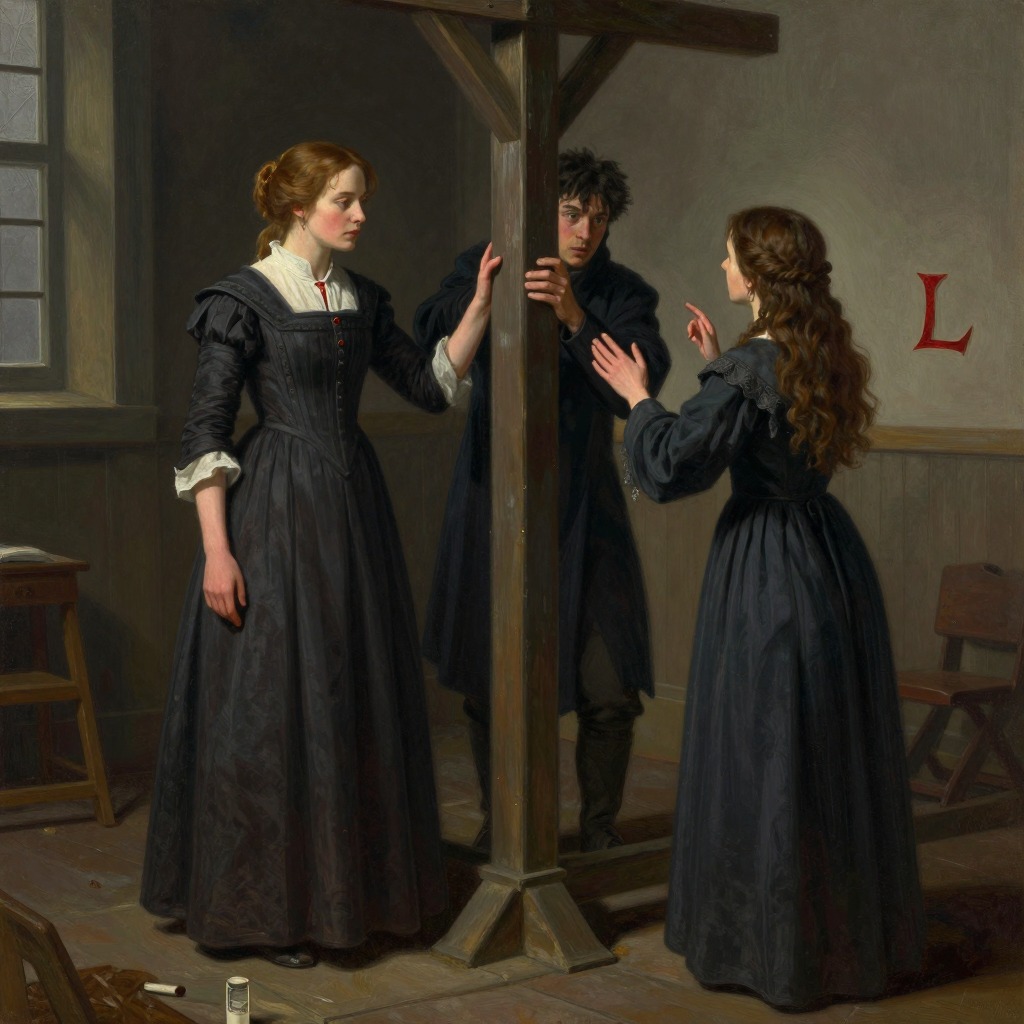
Hester's Public Shame and Outcast Life
Traces Hester Prynne's emergence from prison, her public exposure on the scaffold, and her subsequent life as a social outcast marked by the scarlet letter.
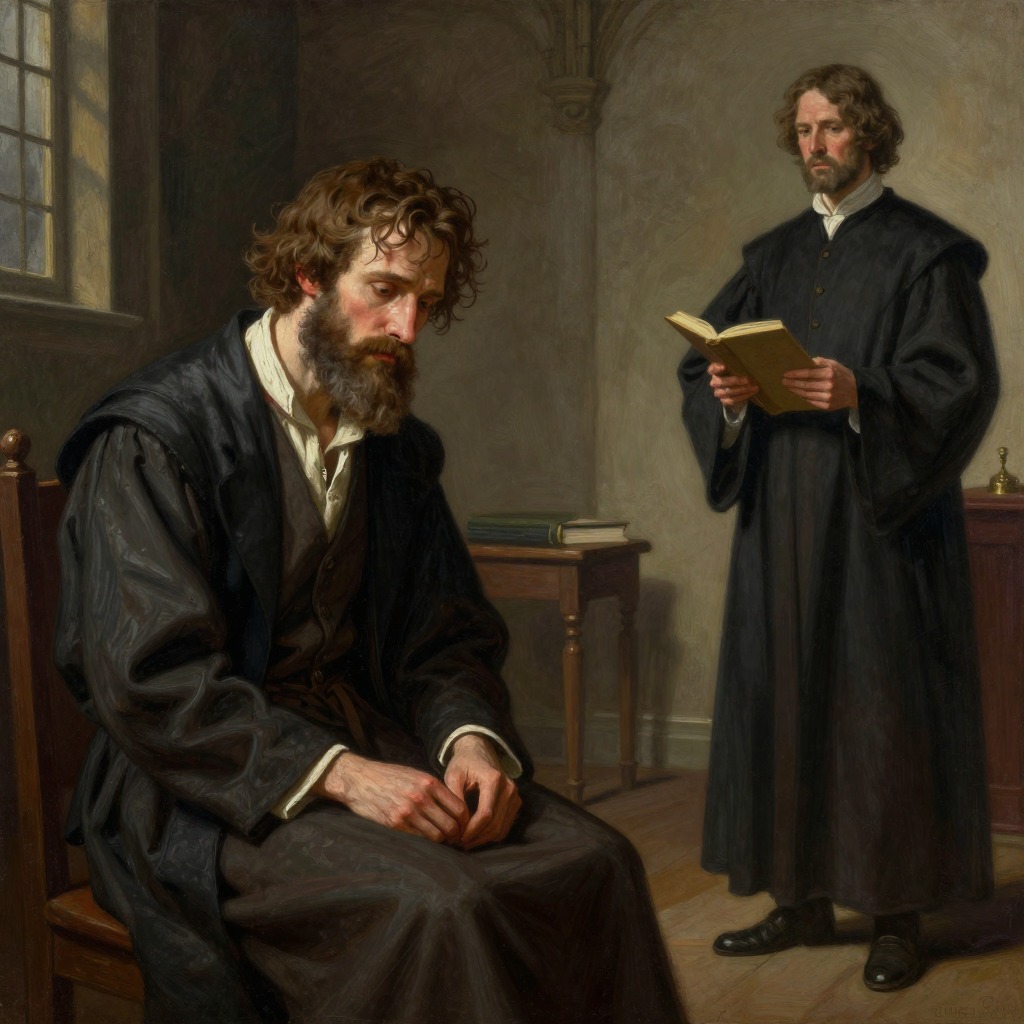
Dimmesdale's Hidden Guilt and Decline
Follows Arthur Dimmesdale's internal struggle with his secret sin, his physical and spiritual deterioration, and his ultimate public confession.
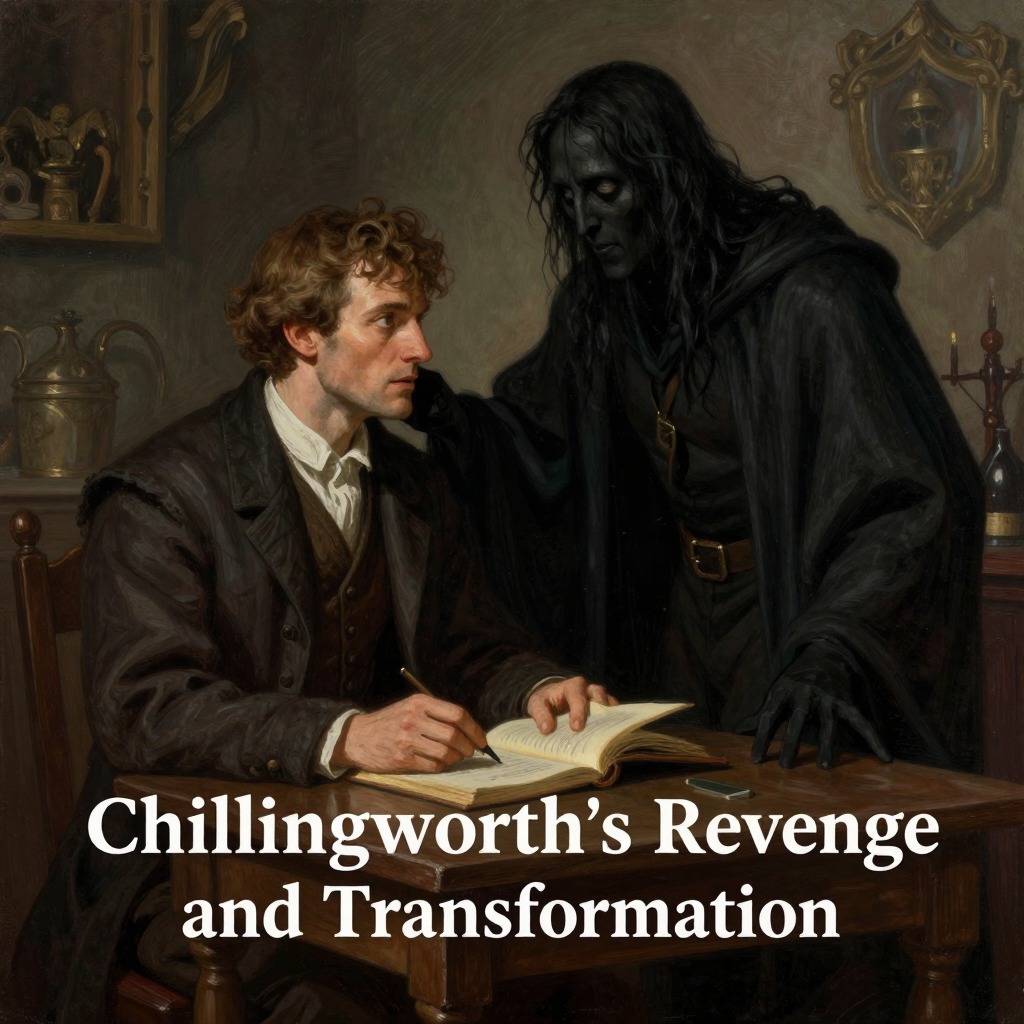
Chillingworth's Revenge and Transformation
Traces Roger Chillingworth's journey from wronged husband to demonic avenger, his psychological torture of Dimmesdale, and his ultimate dissolution.
